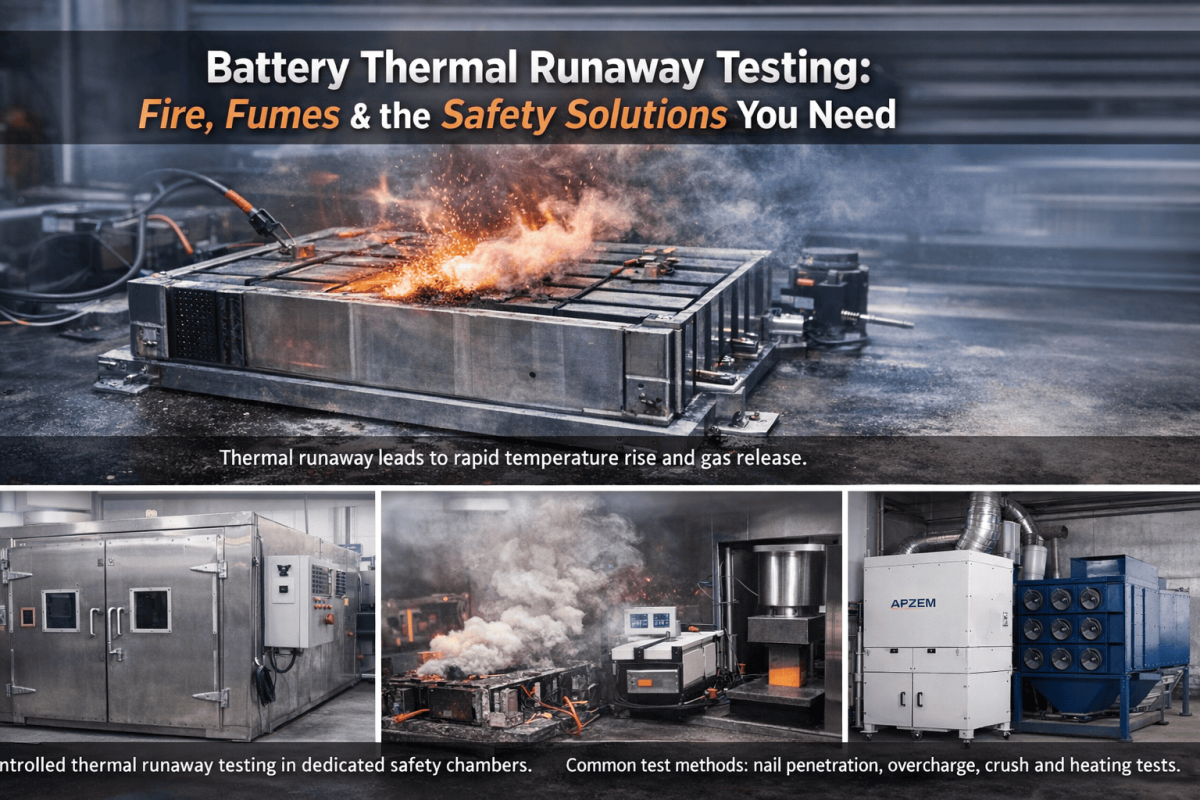
Battery Thermal Runaway Testing is a critical safety evaluation performed on lithium-ion batteries used in electric vehicles, energy storage systems, and industrial applications. Thermal runaway refers to an uncontrollable rise in battery temperature caused by internal chemical reactions, which can lead to fire, explosion, pressure build-up, and release of toxic and flammable gases. This condition may occur due to overcharging, internal short circuits, physical damage, manufacturing defects, or exposure to high temperatures. Thermal runaway testing is carried out to ensure user safety, validate battery pack design, and confirm compliance with international safety standards such as UN 38.3, IEC 62619, UL 9540A, and UL 2580. During testing, thermal runaway is triggered using methods like nail penetration, overcharge testing, external heating, crush testing, or short circuit simulation, while key parameters such as temperature rise, voltage drop, gas emissions, fire intensity, and thermal propagation to nearby cells are closely monitored. One of the major concerns during these tests is the release of hazardous gases such as hydrogen fluoride (HF), carbon monoxide, and VOCs, which require proper ventilation and gas scrubbing systems to ensure safe operation. Therefore, thermal runaway testing facilities must be equipped with fire-rated enclosures, high-efficiency exhaust systems, scrubbers, and safety controls to protect personnel, equipment, and the environment. In addition to gas emissions, thermal runaway testing also generates fumes, smoke, and fine dust particles after testing, which must be safely extracted and filtered before releasing air into the workplace. To address this, APZEM provides effective solutions such as high-efficiency fume extractors and industrial dust collectors that can capture and control the fumes and dust generated after battery testing, ensuring a safer working environment and supporting compliance with environmental and occupational safety standards. Overall, battery thermal runaway testing plays a vital role in ensuring battery reliability, preventing catastrophic failures, and supporting the safe adoption of advanced battery technologies.