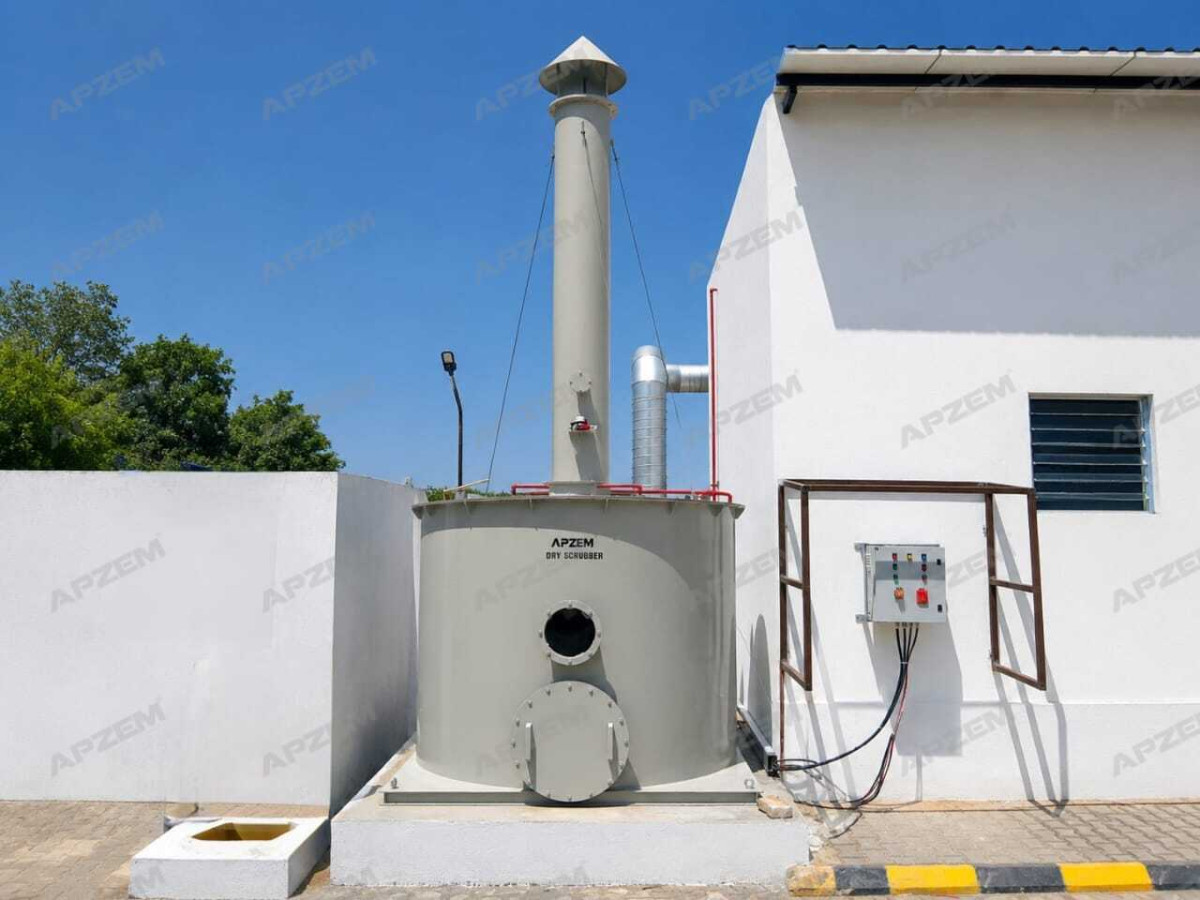
Industrial air pollution control has traditionally been associated with wet scrubbers, where water and chemicals are used to remove harmful gases from process exhaust. While wet scrubbing remains an effective solution for many applications, it is not always the most practical or economical choice. What many industries don't realize is that dry scrubbers can offer an equally effective alternative for specific contaminants—without consuming water or generating wastewater. Instead of relying on liquid absorption, dry scrubbers use specially engineered adsorption or chemisorption media to capture and neutralize hazardous gases such as hydrogen sulfide (H₂S), chlorine (Cl₂), hydrogen chloride (HCl), sulfur dioxide (SO₂), ammonia (NH₃), and various volatile organic compounds (VOCs). This makes them particularly suitable for industries seeking to reduce water consumption, simplify maintenance, and meet increasingly stringent environmental regulations. With fewer mechanical components, lower maintenance requirements, and a compact footprint, dry scrubbers can significantly reduce operating costs while providing reliable emission control. However, selecting the right dry scrubber involves more than simply choosing a media bed. Factors such as gas composition, airflow rate, inlet concentration, temperature, humidity, and required removal efficiency all influence system performance and media life. A well-designed dry scrubber can achieve high removal efficiencies while minimizing pressure drop and maintenance frequency. As industries continue to prioritize sustainability and resource conservation, dry scrubber technology is becoming an increasingly preferred solution for applications where water-free gas treatment offers clear operational advantages. Understanding where and how dry scrubbers work best enables engineers and plant managers to make informed decisions that improve environmental compliance, reduce lifecycle costs, and enhance overall process reliability. The truth is that dry scrubbers are not intended to replace every wet scrubber application, but when applied correctly, they deliver an efficient, sustainable, and cost-effective approach to industrial air pollution control. Choosing the appropriate technology based on process conditions rather than convention can lead to significant long-term benefits for both the industry and the environment.