When we talk about industrial air pollution, the first thing that comes to our mind is usually thick black smoke coming out of a chimney. But the actual scene is not always like that. Sometimes, the air looks completely clean, but the pollution is still there. Harmful gases, chemical vapours, VOCs, and unpleasant odours can quietly escape from industrial processes without giving any visible warning. You may not see them, but definitely, that doesn't mean they are harmless.
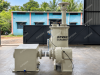
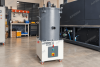
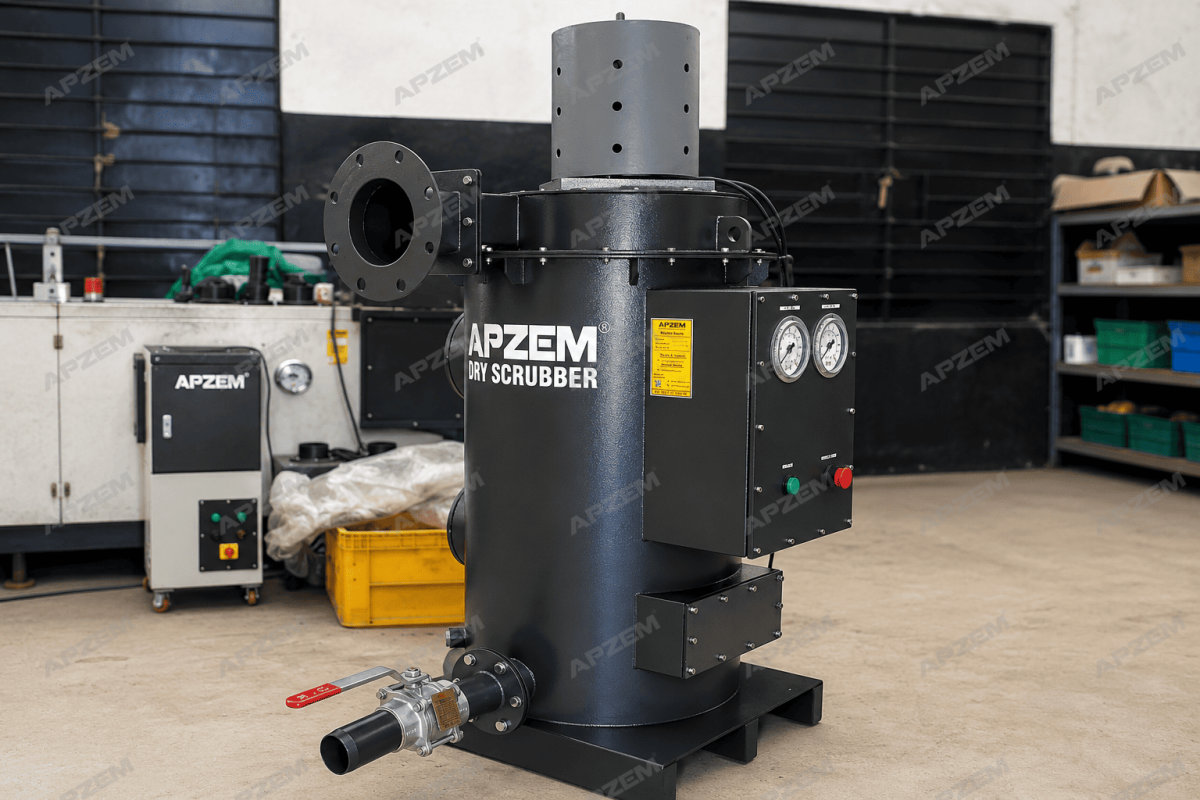
This is where the APZEM Dry Scrubber quietly does its job. Think of it like a silent security guard for industrial air. No big drama, no continuous water spraying, and no complicated liquid circulation. Contaminated air enters the dry scrubber and passes through a specially selected adsorption or chemically impregnated media bed. As the air moves through the media, unwanted gaseous pollutants are captured through adsorption or chemisorption. The treated air then leaves the system with a significantly reduced pollutant concentration. Sounds simple, no? But the engineering happening inside is much more interesting. One common misunderstanding is, “Just fill activated carbon in a tank and pass the air. Job done!” If only engineering was that easy! Every pollutant behaves differently. H₂S from an STP, ammonia from a process area, VOCs from solvents, and other chemical fumes cannot simply be treated with the same media and same design. Airflow, inlet concentration, humidity, temperature, media depth, contact time, pressure drop, and breakthrough capacity everything matters. At APZEM, we study the pollutant first and then engineer the dry scrubber around the actual application. The right media is selected, adequate gas–media contact is considered, and airflow distribution is designed to reduce channeling. Because, at the end of the day, a dry scrubber should not be just a black vessel filled with carbon. It should actually solve the pollution problem. So, the next time you walk through an industry and the air looks clean, remember some pollution is invisible. And somewhere in the system, an APZEM Dry Scrubber may be silently fighting it, one cubic metre of air at a time.