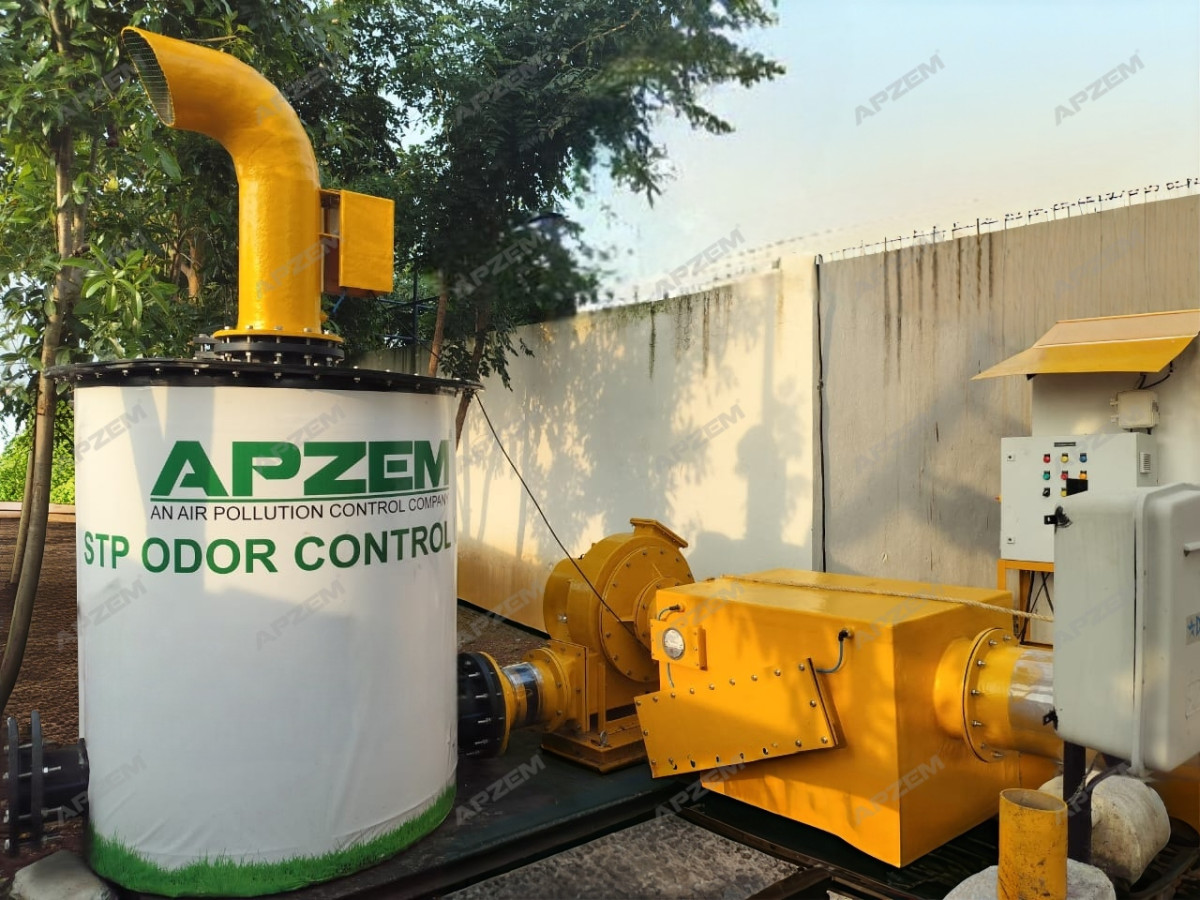
Sewage Treatment Plants (STP) and Effluent Treatment Plants (ETP) are critical for wastewater management, but they often generate odorous and hazardous gases such as hydrogen sulfide (H₂S), ammonia (NH₃), and volatile organic compounds (VOCs) from units like equalization tanks, aeration tanks, and sludge handling systems. The Apzem odour control unit is specifically engineered to address these emissions through a highly efficient wet scrubbing process, ensuring safe and compliant discharge into the atmosphere. The system operates on the principle of gas-liquid absorption, where contaminated air is collected and passed through a packed bed scrubber, allowing intimate contact between the gas and the scrubbing liquid in a counter-current flow arrangement. Depending on the nature of pollutants, suitable chemical dosing—such as alkaline solutions for acidic gases like H₂S or acidic solutions for ammonia—is incorporated to enhance removal efficiency through neutralization and oxidation reactions. For complex or mixed emissions, Apzem provides multi-stage scrubber systems to ensure complete treatment and odor elimination. The design is carefully optimized based on key parameters such as airflow rate, inlet concentration (ppm), liquid-to-gas ratio, packing characteristics, and contact time, ensuring high efficiency with minimal chemical consumption and maintenance. Constructed using corrosion-resistant materials like PP, FRP, or PVC, the system is robust, reliable, and suitable for continuous operation in aggressive environments. With a strong focus on performance, safety, and regulatory compliance, Apzem odor control units provide an effective and sustainable solution for managing emissions from STP and ETP systems, making them an essential component in modern wastewater treatment infrastructure.