Industrial air pollution control is not just about installing a scrubber or filter and expecting it to solve every emission problem. Every industry has its own manufacturing process, raw materials, operating conditions, gas composition, temperature, humidity, and emission characteristics. Because of these differences, a standard or "one-size-fits-all" approach often leads to poor performance, higher operating costs, and difficulty in meeting pollution control norms.
At APZEM, we believe that the first step towards effective emission control is understanding the customer's process in detail. Before recommending any solution, our engineering team studies the complete process, identifies the source of pollution, evaluates the type and concentration of contaminants, and understands the operating conditions of the plant. This approach helps us design a system that is not only technically suitable but also reliable, energy-efficient, and easy to operate.
For example, two industries may both release acidic gases, but the nature of those gases, their concentration, airflow, and operating temperature can be entirely different. In such cases, installing the same scrubber design for both plants may not deliver the expected results. A customized solution ensures that the equipment is designed specifically for the application, resulting in higher removal efficiency and lower maintenance costs.
Another important aspect is future readiness. Many industries expand production over time or introduce new manufacturing processes. A well-engineered pollution control system should be designed with these possibilities in mind. Considering future requirements during the design stage can help avoid costly modifications later.
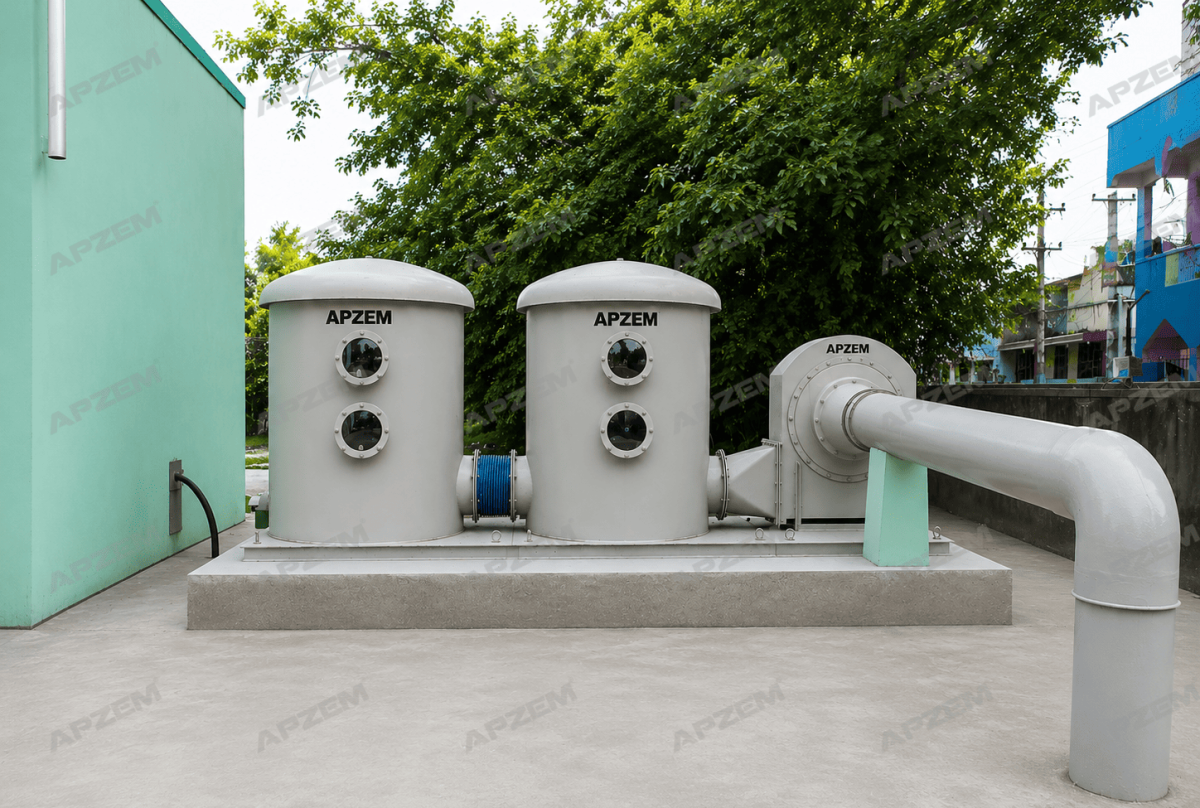
At APZEM, every project begins with understanding the customer's requirement rather than simply offering a product. Whether it is a wet scrubber, dry scrubber, venturi scrubber, VOC control system, odor control unit, or any other air pollution control equipment, our focus remains the same—to provide the most suitable solution based on actual process conditions.
This engineering-first approach has enabled APZEM to deliver efficient air pollution control systems across a wide range of industries, including chemicals, pharmaceuticals, food processing, paint manufacturing, metal finishing, and many others. By combining process knowledge with practical engineering, we help industries achieve regulatory compliance, improve operational efficiency, and contribute to a cleaner environment.
The right pollution control system is never selected from a catalogue—it is engineered after understanding the process. When the process is understood correctly, emissions can be controlled more effectively, operating costs can be reduced, and industries can achieve long-term, sustainable performance. That is the value of customized engineering, and that is the approach APZEM follows in every project.